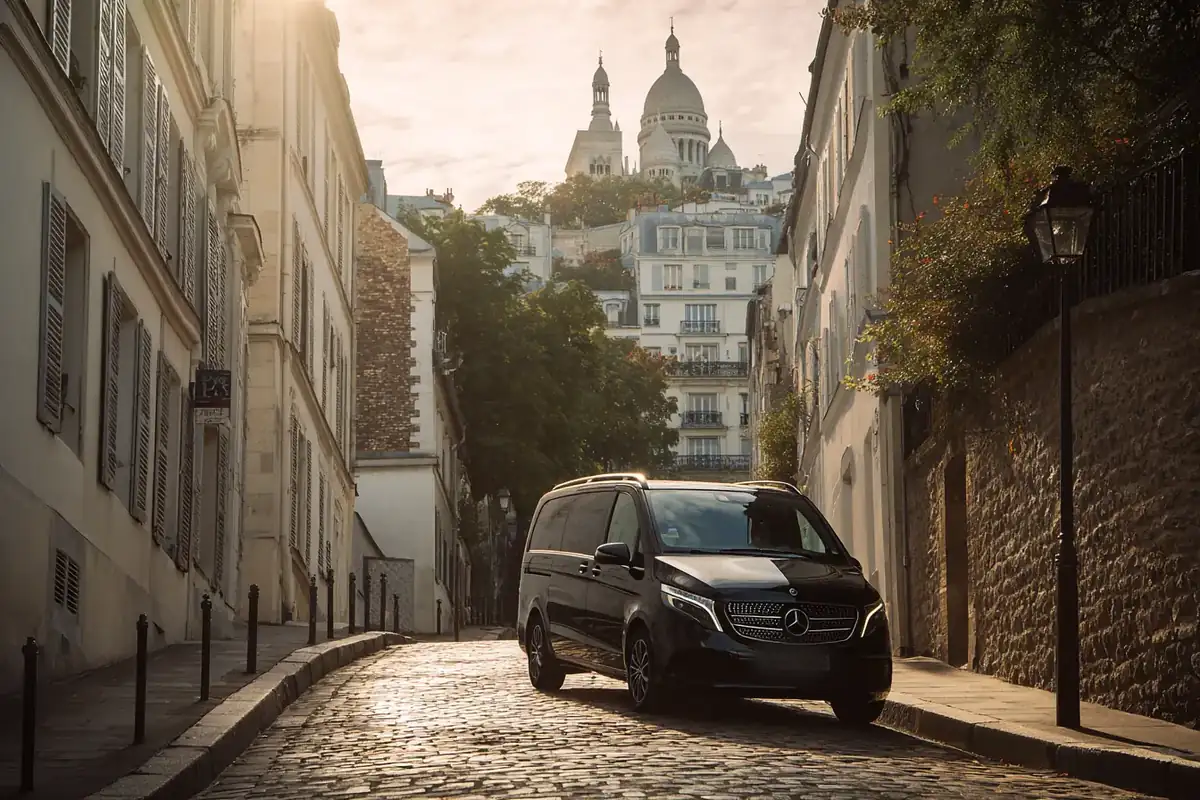

A 12th-century cathedral, reopened after the fire
Notre-Dame de Paris is a Catholic cathedral and the seat of the Archdiocese of Paris, whose construction began, by the traditional date, in 1163. Viollet-le-Duc restored it in the 19th century and gave it the spire that was destroyed in the April 2019 fire, which also consumed most of the roof. This reminder helps explain why the cathedral remains both a religious and a heritage site.
After five years of work, the cathedral reopened in December 2024. The City of Paris says that some work continues, including the apse, the sacristy and the stained glass, as well as the redesign of the forecourt and surroundings. The area is still changing, so practical information from earlier years may no longer apply. Nothing guarantees that a layout seen one day will be identical the following month.
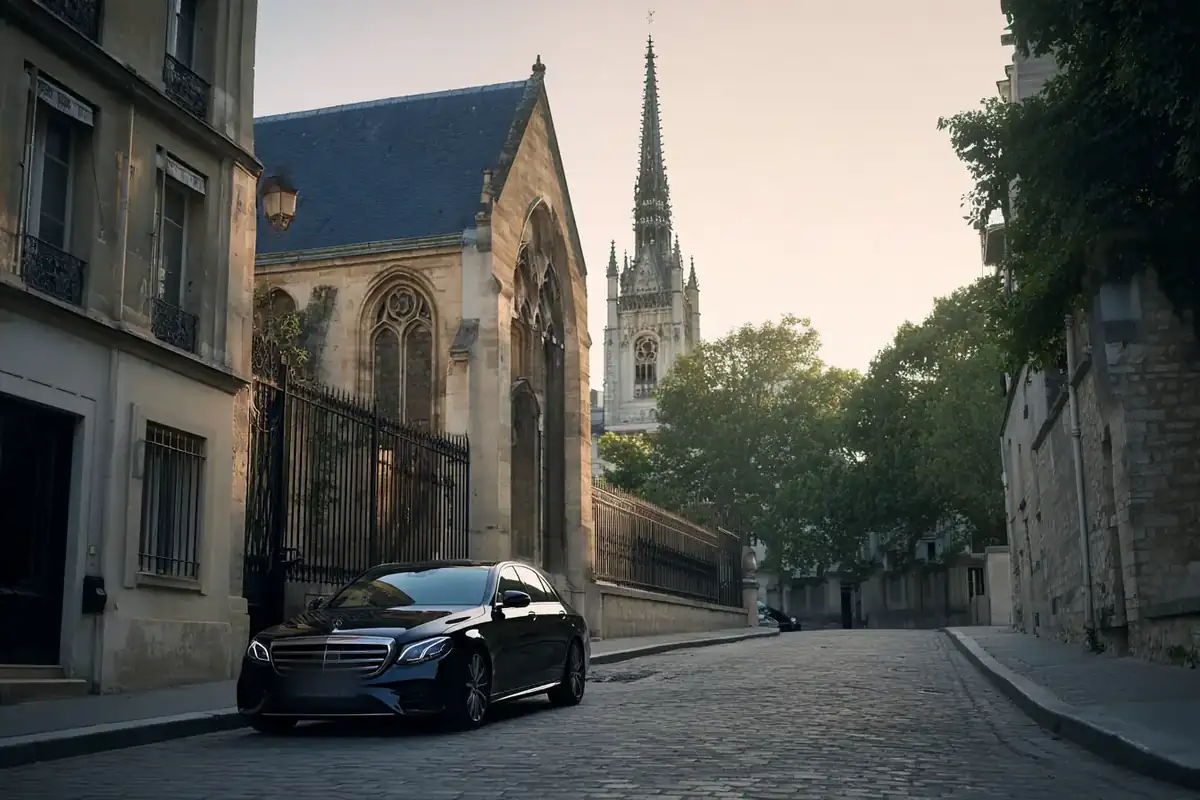
Île de la Cité, forecourt, quays: reading the ground
The cathedral occupies the Île de la Cité in the 4th arrondissement, facing the Parvis Notre-Dame, officially Place Jean-Paul-II. The island is ringed by quays and linked to both banks by bridges, which limits the approach routes and makes traffic sensitive to one-off closures decided by the authorities. This island setting is a visual asset but a challenge for car routes.
Among transport landmarks, the Paris tourist office lists Cité station on Métro line 4 and Saint-Michel Notre-Dame on RER line B. For a passenger in a car, these mainly place the surroundings. The bank you approach from depends on the starting point and on any restrictions in force that day. It is better to consult a recent official source on the day than to rely on an old map.
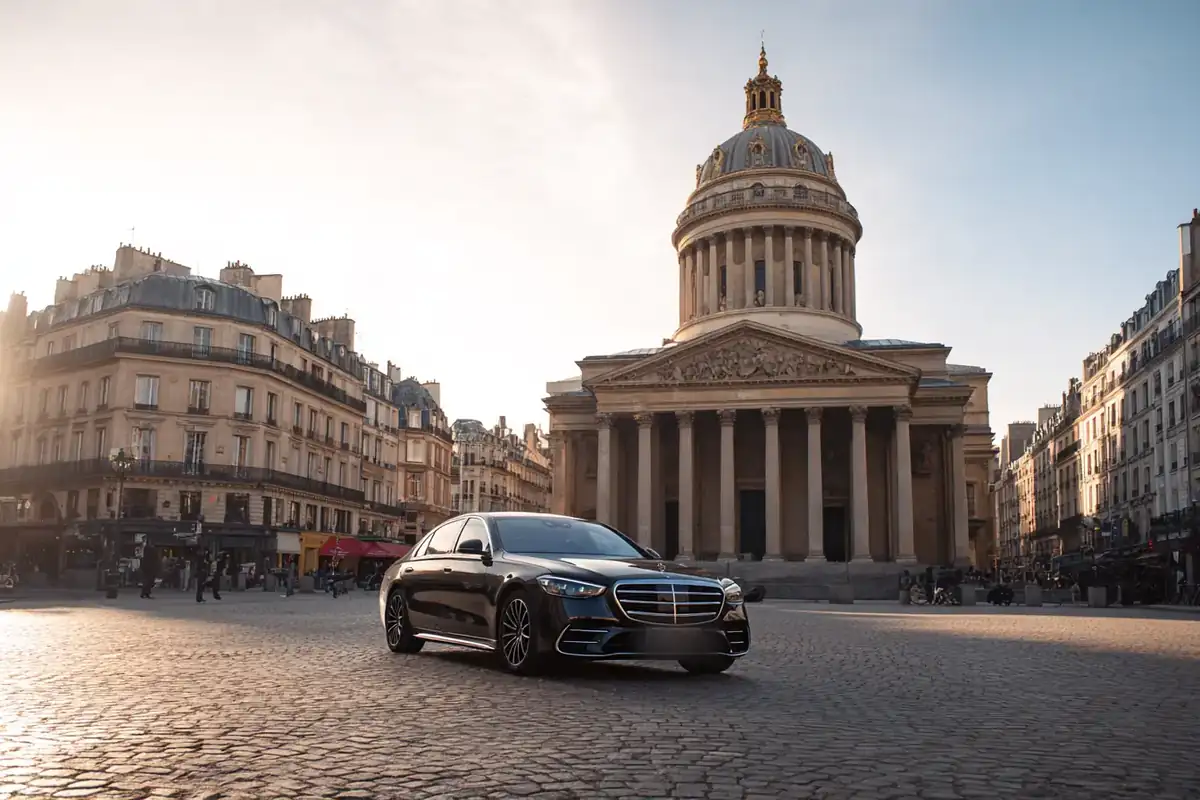
A site under works: what can limit the drop-off
According to the specialist press, the redesign of the surroundings plans a large open square between the apse and the Seine, and the conversion of the forecourt's underground car park into an interior promenade. This work is spread over several years and can alter access and stopping options. Half a day of flexibility is sometimes useful to absorb these variations.
These changes are decided by the City of Paris and the authorities, and we do not invent rules. What can be prepared: a drop-off point confirmed a few days beforehand, a pick-up point away from the works area, and a back-up plan if a street or quay is closed to traffic on the day. It is best not to park right next to the site, and to plan a pick-up a few streets away.
- Confirm the drop-off point a few days before
- Plan a pick-up away from the works
- Keep a number reachable on site

Going in: free entry, optional booking, accessibility
At the time of writing (October 2026), the Paris tourist office states that entry is free for everyone, that booking a time slot is optional, and that a dedicated queue serves visitors without a reservation. These conditions may change, so check them on the official website before the day of your visit. This arrangement helps a family as well as a guest passing through.
The same source adds that the entrance is level, that a lift serves the chapels, and that priority access exists for visitors with disabilities. For a passenger with reduced mobility, the chauffeur chooses a drop-off close to the entrance and stays reachable throughout the visit. That attention turns a potentially tiring visit into a calm moment.
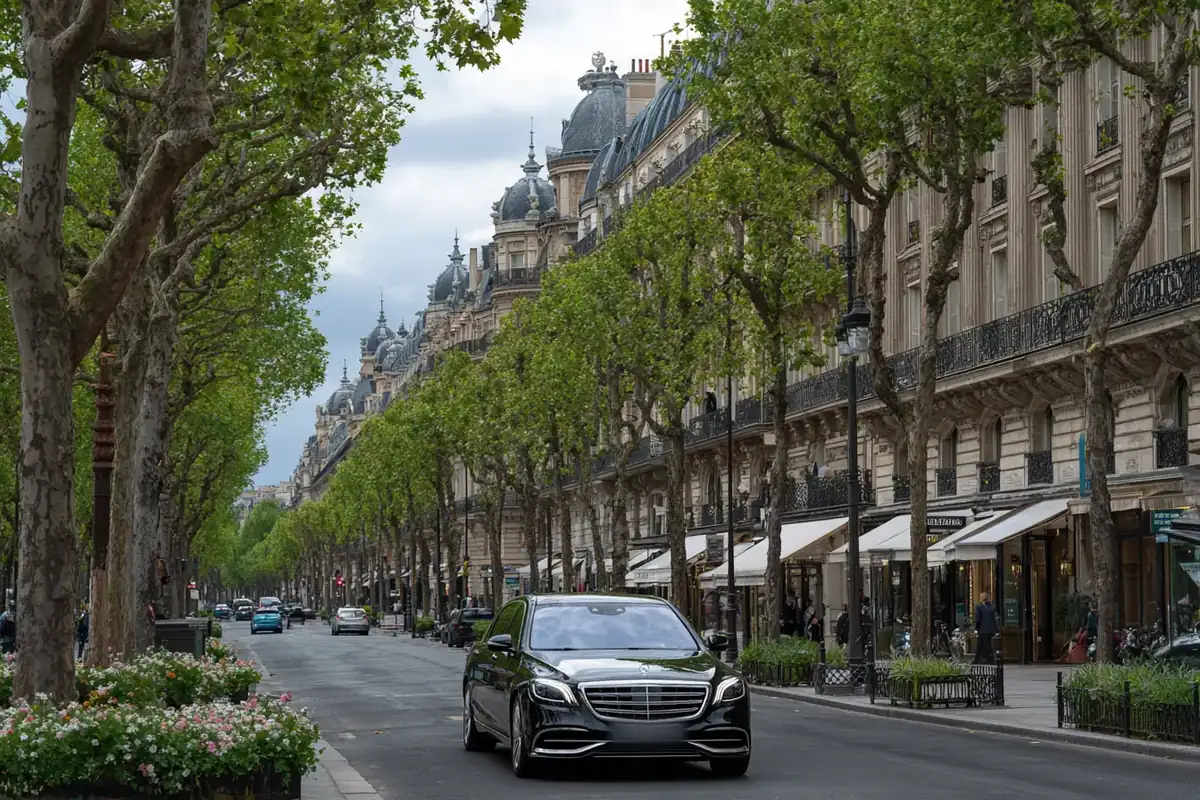
A place of worship first: discretion and pacing
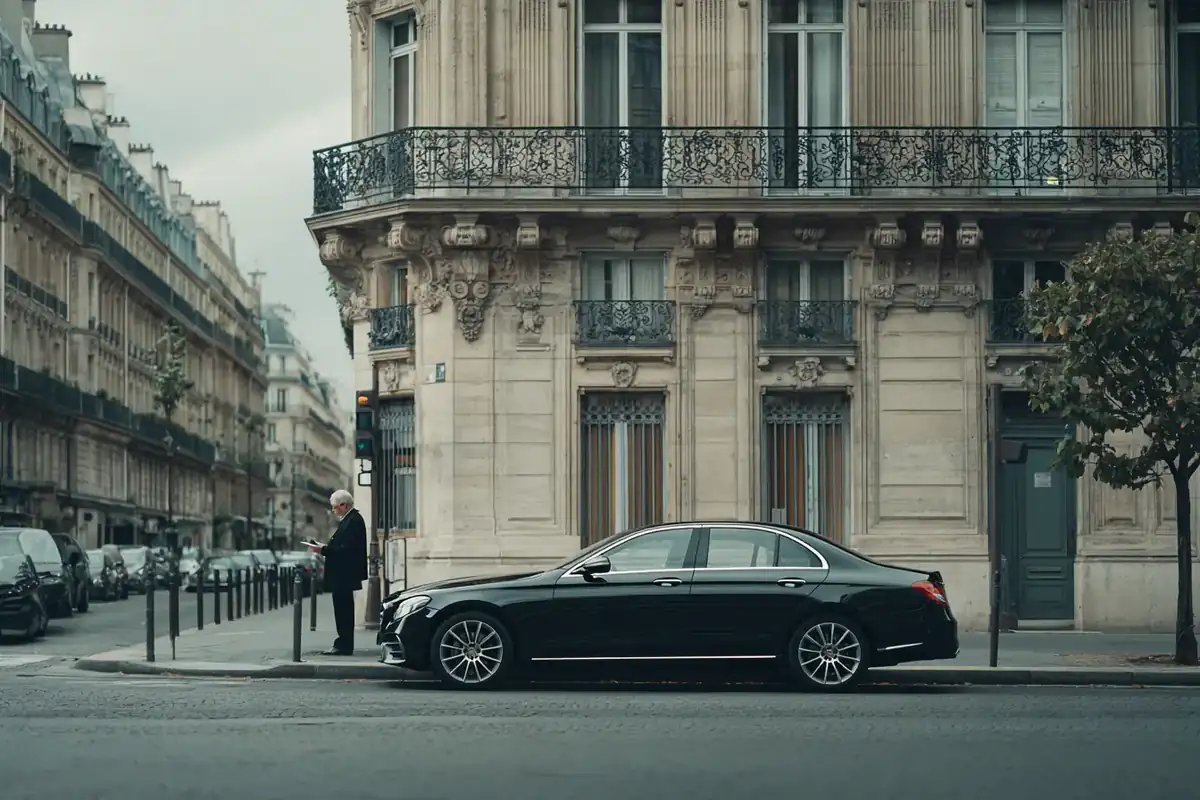
Notre-Dame remains a place of worship, with services and a public of pilgrims as well as visitors. A low-key arrival suits the spirit of the place: suitable dress, limited luggage and a discreet chauffeur who sets down without drawing attention and waits away from the forecourt during the visit. This respect for the place is shared by the great majority of visitors.
For a guest who wants to add other stops, a cultural itinerary can link the cathedral to the Louvre Museum, across the Seine, or to other sites in our Paris landmarks section. The sequence is decided by time slots, queues and the guest's own pace. A little organisation is all it takes to keep the time spent on site enjoyable.

For organisers: assistants, concierge desks, groups
For an assistant or concierge desk, preparation needs little: the passenger's name, desired time, any mobility need and a number reachable on site. With support designed for concierge desks, a firm quote is sent before confirmation and follow-up stays simple. That simplicity is one of the advantages of planning ahead.
For a group, the vehicle matters: a V-Class or a Sprinter avoids multiplying cars, but setting down a group needs a spot that is easier to reach. Rules for groups are the cathedral's to set, so ask the site's organisation before booking the transport. This step is often forgotten, yet it determines how well the outing goes.

Book a chauffeur to visit Notre-Dame de Paris
To visit Notre-Dame de Paris, a chauffeur makes arrival, drop-off as close as allowed and the return smoother, especially for guests new to Paris. Give the date, the ticket or visit time and the number of people: IKIGAI Limousine replies with a firm quote before confirmation.
Access, drop-off and parking rules are set by the site’s manager and can change; we build them into the transport plan. For a day of visits, a chauffeur at disposal avoids multiplying bookings. See our chauffeur at disposal and VIP service, then request your firm quote.
Sources consulted
- Paris.fr – reopening of Notre-Dame
- Paris Je t'aime – Notre-Dame cathedral
- Notre-Dame de Paris – Wikipédia
- Notre-Dame de Paris – Wikipedia
- Sortiraparis – parvis de Notre-Dame
IKIGAI Limousine is independent and is not affiliated with any venue, brand or organisation mentioned. Names are cited for information only.