A bridge born of the 1900 World’s Fair
The Pont Alexandre III is a steel bridge across the Seine, built for the 1900 Exposition Universelle, of which it was meant to be a showpiece. It reflects Franco-Russian friendship: Tsar Nicholas II laid the first stone in 1896. It is a listed historic monument, so its surroundings receive close attention from the people who manage them. For a traveller it is above all a landmark, often used to locate a meeting, a crossing point or a route between the two banks.
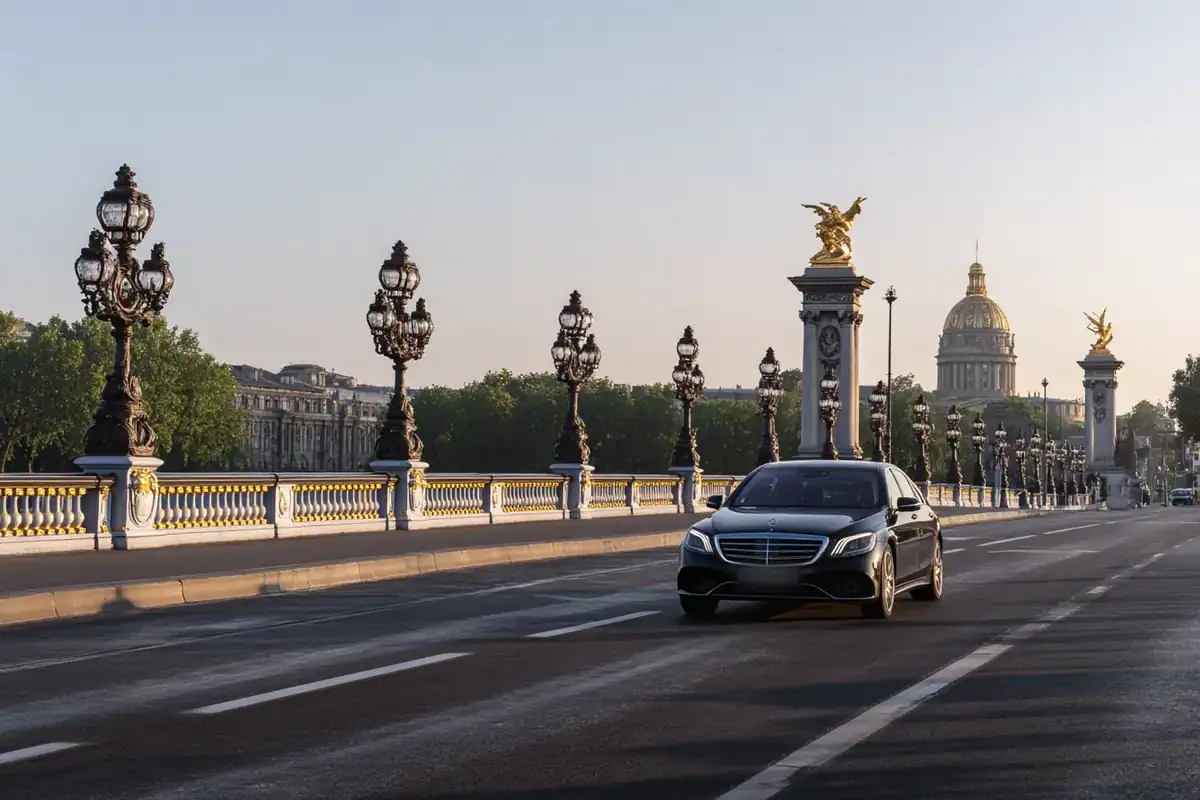
Its four ends are marked by pylons topped with gilded Fame figures on winged horses, which are widely photographed. That decoration explains the crowds of walkers and photographers on the pavements at certain hours and in fine weather. For a driver this footfall is a factor: it is better to agree a realistic stopping point beforehand than to improvise on the spot, amid continuous traffic.
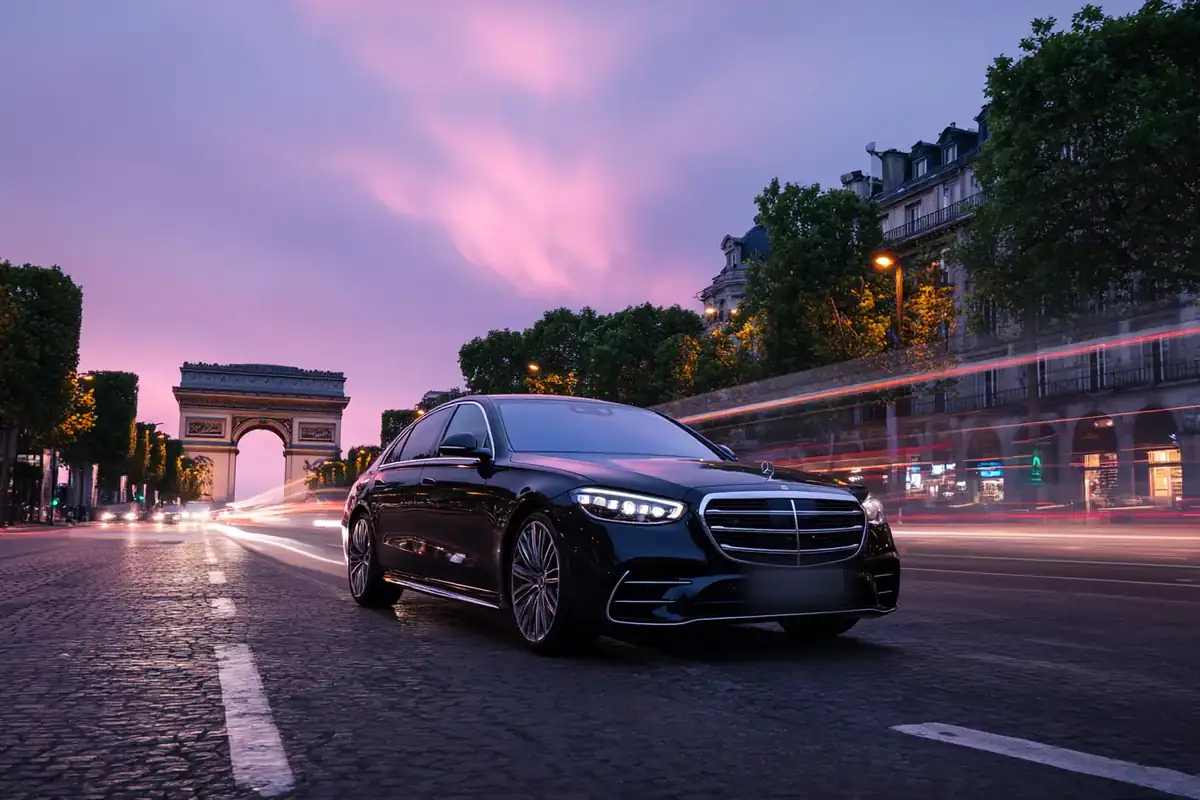
Between the 7th and the 8th: what the bridge connects
The bridge links the Esplanade des Invalides, in the 7th arrondissement, with avenue Winston-Churchill, in the 8th, close to the Petit Palais and the Grand Palais. It was built on the axis of the esplanade with a deliberately low profile, so that the Invalides stayed visible from the Champs-Élysées. This view makes the bridge a link between two districts of different character: one institutional and residential, the other oriented to avenues and major cultural venues.
For trip planning, this means the bridge often connects an appointment on the Left Bank with another on the Right. The Invalides metro station (lines 8 and 13) and the Invalides RER C station are nearby on the Left Bank, which helps guests arriving by public transport. A chauffeur can then meet them at a point specified in advance, so nobody has to look for their car.
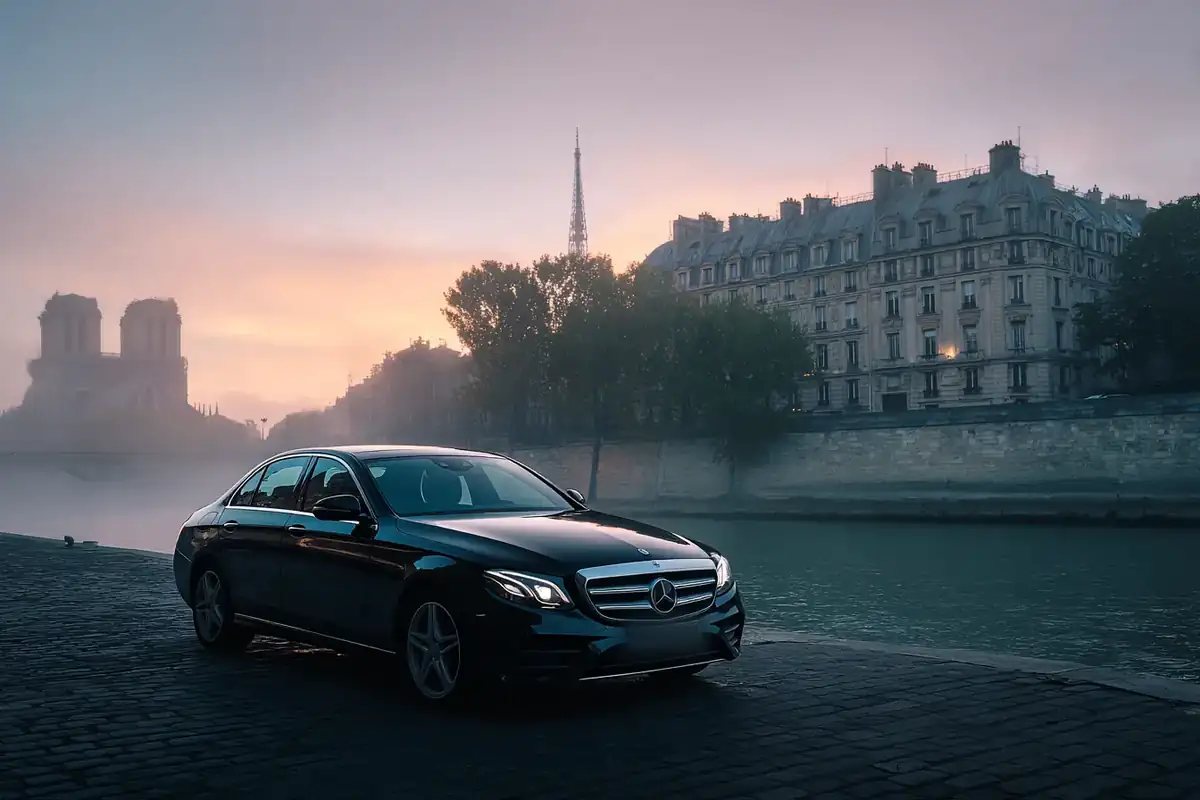
Traffic, riverside roads and pick-up points
The bridge is a through route: people cross it more than they stop on it. Two stone tunnels cut into the abutments serve the lower quays, and roads run along the river on both sides, notably the Cours la Reine on the Right Bank. Where you can stop, traffic directions and any restrictions are matters for the City of Paris and the competent authorities, and they can change with events or roadworks.
For a meeting in this area, plan two pick-up points rather than one, one on each side of the river, and keep direct contact with your driver by message. An underground car park stands nearby on rue de Constantine, on the 7th arrondissement side, and can serve as an alternative place to wait. IKIGAI Limousine builds all this into the transport plan, taking account of any perimeters communicated by managers or organisers.
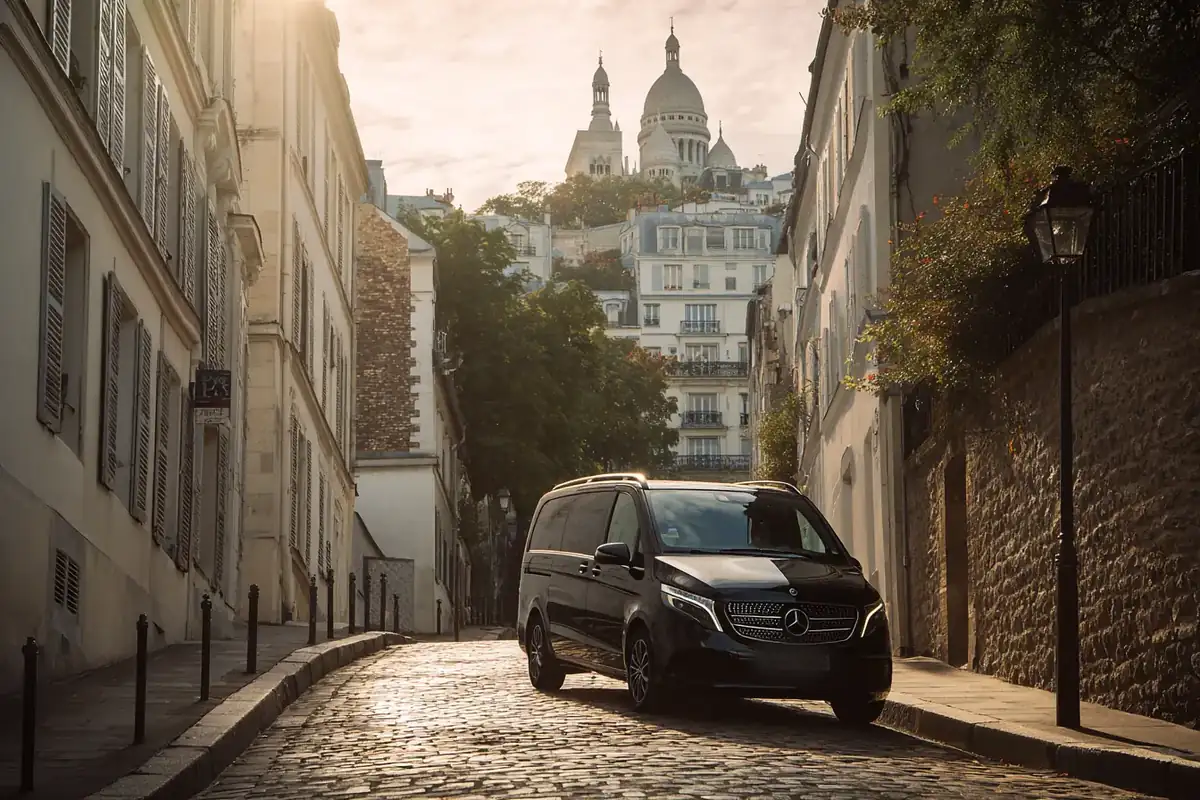
Strolling, photos and meeting on the spot
The bridge is prized for its view of the Seine, the Invalides and, in the distance, the Eiffel Tower. A short walk between two appointments can therefore fit into a day: the chauffeur drops passengers on one side, they cross on foot, and he waits on the other. The plan only works if the arrival point is clear and each side has the other’s number on their phone.
If the walk is tied to a shoot, a photo session or a private event, ask the City of Paris about any permissions required: we do not issue them and do not set their conditions. Our role is transport only: convoys, shuttles or on-site coordination for an event, with vehicles suited to the number of guests, without adding constraints to your authorisations.
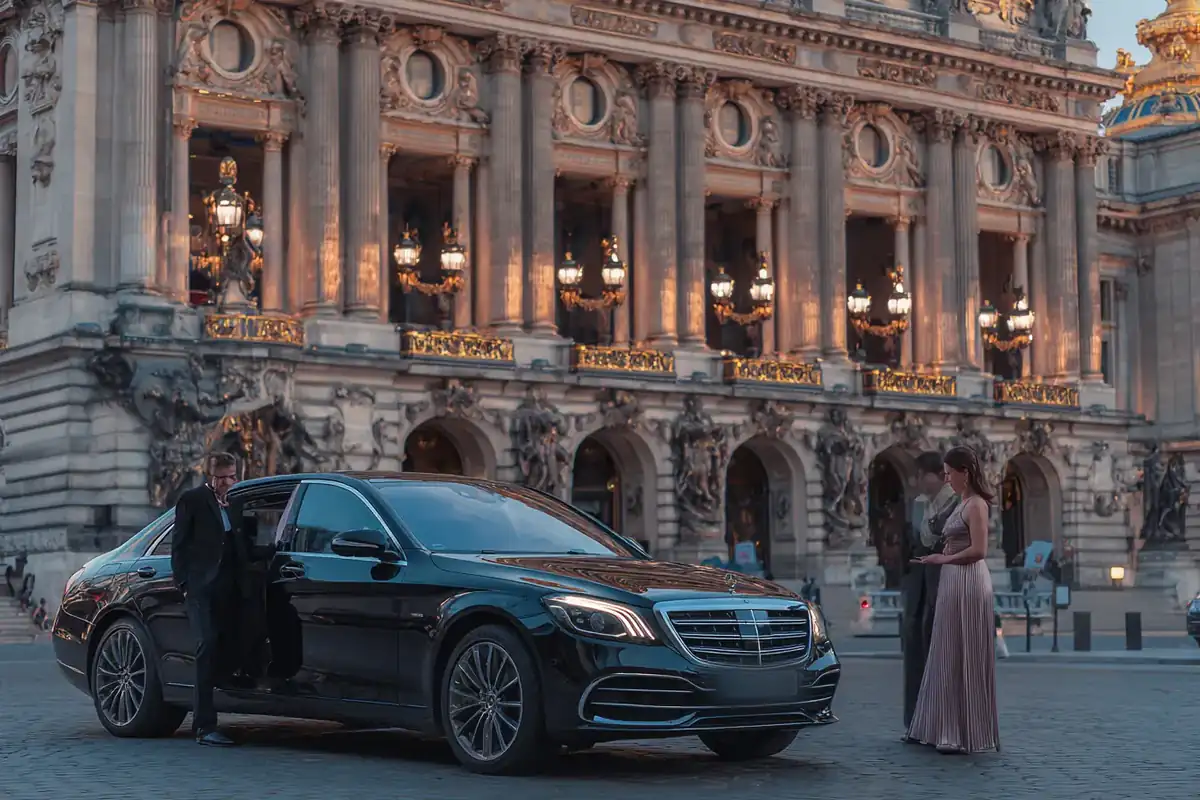
For those organising: a crossing point to plan around
For an assistant or a concierge team, the bridge is mainly a landmark inside a longer itinerary: a hotel near the Champs-Élysées, a meeting at the Invalides, lunch on the Left Bank, then back with a VIP chauffeur. Give the address of each stage, the arrival time you want and the party size, rather than simply naming the bridge. A precise address is what lets the driver prepare the approach.
The Eiffel Tower area, the Grand Palais and the Invalides combine well into a half-day of sightseeing. A firm quote is issued before confirmation, discretion is contractual, and follow-up is by WhatsApp or email. More ideas are gathered in our landmarks section. Mention any accessibility need so we can choose the most suitable vehicle and stopping point.
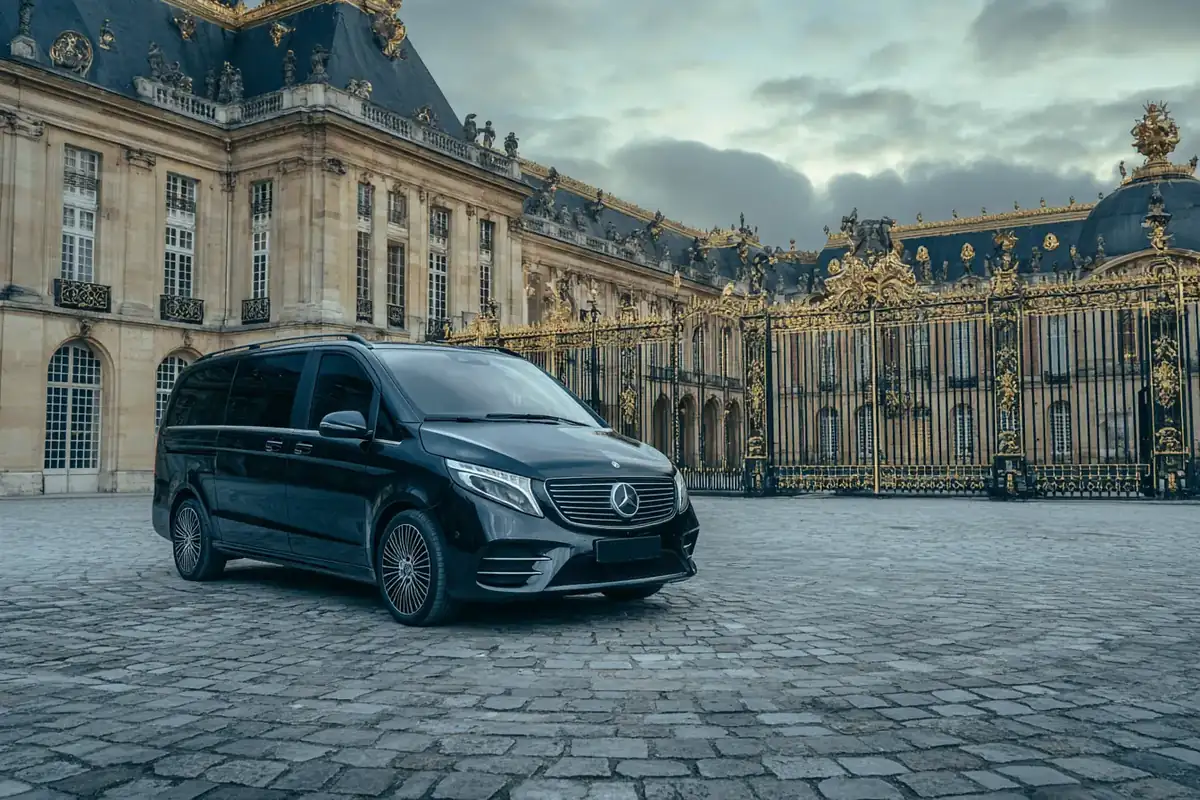
Book a chauffeur to visit the Pont Alexandre-III
To visit the Pont Alexandre-III, a chauffeur makes arrival, drop-off as close as allowed and the return smoother, especially for guests new to Paris. Give the date, the ticket or visit time and the number of people: IKIGAI Limousine replies with a firm quote before confirmation.
Access, drop-off and parking rules are set by the site’s manager and can change; we build them into the transport plan. For a day of visits, a chauffeur at disposal avoids multiplying bookings. See our chauffeur at disposal and VIP service, then request your firm quote.
Sources consulted
- Wikipédia – Pont Alexandre-III
- Ville de Paris – Expositions universelles
- Paris je t’aime – Pont Alexandre III
IKIGAI Limousine is independent and is not affiliated with any venue, brand or organisation mentioned. Names are cited for information only.