

Start with the right brief
Most journeys that go wrong share one cause: a piece of information was missing at the start. Before contacting a provider, gather the passenger's name, the exact pick-up and drop-off points, the requested time, the number of travellers and bags, and a phone number for someone reachable on the ground. Written once, this foundation can be reused for every booking and saves you from rebuilding the context under the pressure of a diary that keeps shifting.
Then add the practical preferences: vehicle type, a quiet cabin for calls, water or press on board, language of conversation, and any allergy or health constraint you think worth flagging. These details take a minute to write down and let the chauffeur tailor the service from the outset, without disturbing your principal at the last moment or phoning you mid-meeting about a question that could have been settled in writing.
Plan for flights and trains that run off schedule
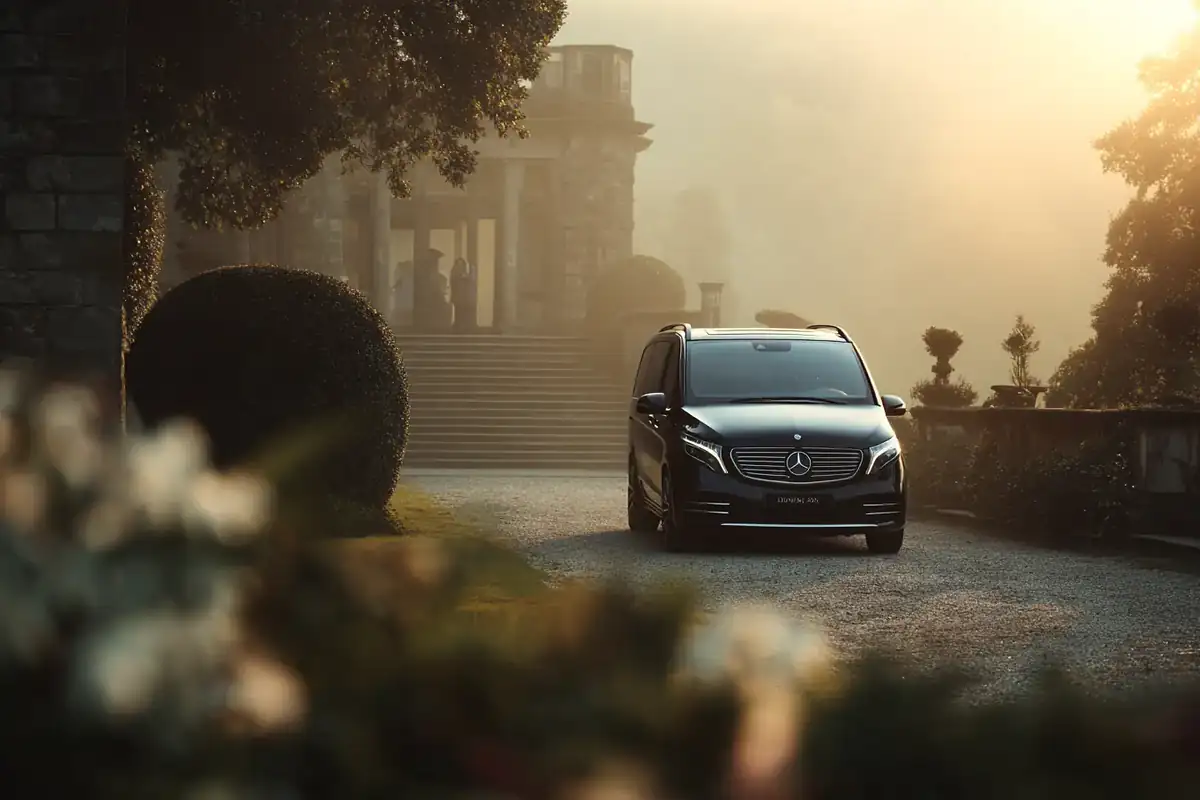
An early arrival or a delayed train is not an incident if the service is designed to absorb it. Share the flight or train number: flight tracking lets the meeting time follow the real arrival, so you never have to chase anyone. For an airport or station transfer, add the terminal or platform whenever you know it, and say whether your principal is arriving by private aviation, where meeting points differ from those of a commercial terminal.
Think about fallback plans too. If a meeting overruns or a dinner moves, a chauffeur on hourly or daily hire stays with your principal and moves on to the next stop without a new booking, sparing you from replaying the whole logistics chain mid-day. Agree in advance who may change the programme in your absence, so that a last-minute decision never depends on your availability. Keep your principal's office informed of any change, so that nobody is waiting at the wrong place or at the wrong time.
Prepare the meet-and-greet
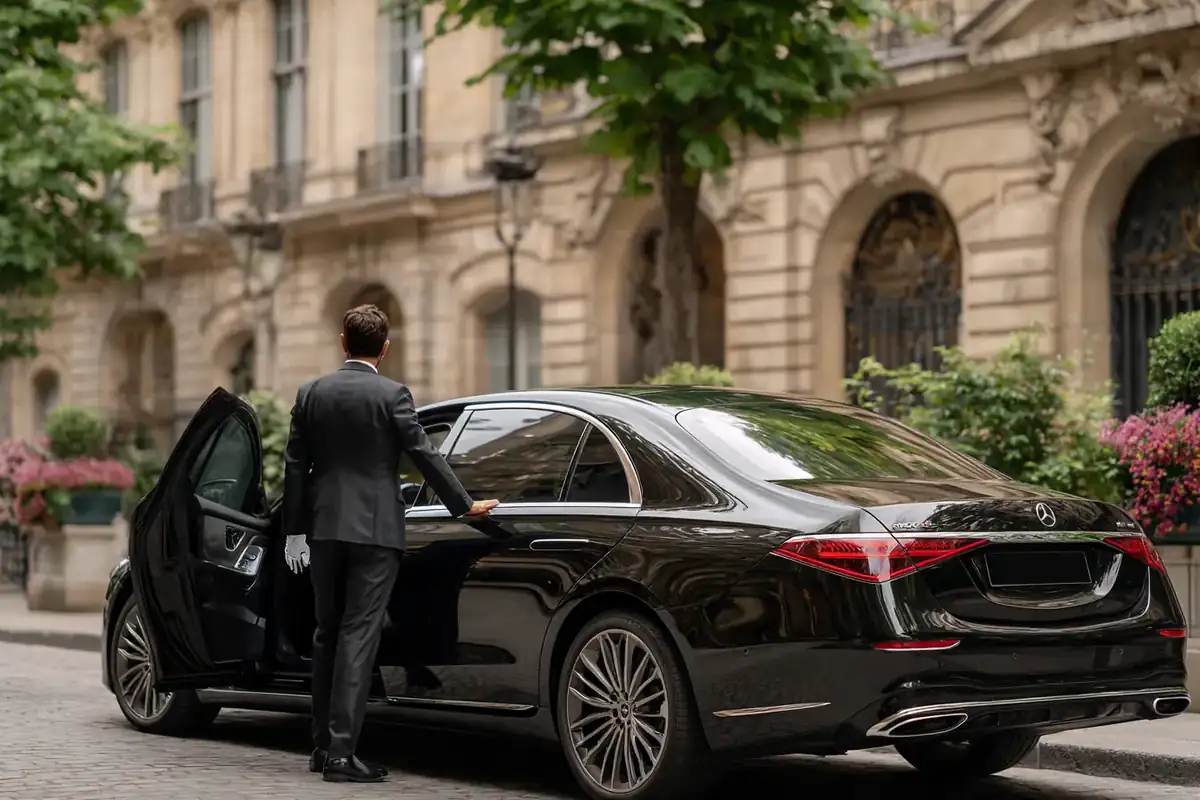
The most delicate moment is the first contact between chauffeur and passenger. Ask for a named welcome and provide the passenger's mobile number, or that of a close colleague, so the chauffeur can reach someone if there is any difficulty. Specify the exact meeting point, such as the hotel entrance, the station concourse or the exit from baggage reclaim, rather than a general mention that leaves room for interpretation. Mention any access constraint at the pick-up point, such as a private car park or a barrier, so the chauffeur can plan the approach.
If your principal travels with a guest, a colleague or family, say so: the vehicle will be chosen accordingly, as will the handling of luggage. For those who prefer little conversation during the ride, simply mention it. The chauffeur will adjust, discreet by principle, and will stay available without intruding, which is what most executives expect on a business trip. This precision prevents a guest waiting on the pavement or luggage being reorganised in front of the hotel.

Choose the vehicle and the format
Vehicle choice depends less on prestige than on use. A saloon such as the S-Class suits one passenger or two, a V-Class a small group with luggage, an electric car like the BMW i7 an executive mindful of environmental impact. You can browse the vehicle range before deciding, or ask for advice if the programme combines different passenger profiles over a single day. Mention any specific need, such as space for a wheelchair or child seats, at the time of the request rather than on the day.
Then separate a single transfer, outbound or return, from a full day. When the schedule is dense or uncertain, a half day or full day gives more flexibility than a series of isolated rides: the chauffeur knows the programme, anticipates travel times and stays close to the meeting places. You manage one booking instead of several, and a single contact remains responsible for the whole day. It is also simpler to give your principal a single contact number for any last-minute change.

Confirm, follow and invoice without friction
Always request a firm quote before confirming: it sets out what is included and removes unpleasant surprises when it is time to pay. Keep a written summary of the exchange, by e-mail or messaging, that you can forward to your principal or their office. This record serves as a reference if the programme changes, and makes internal approvals easier when the expense must be signed off by someone other than you.
On the administrative side, give your accounts team what they need at booking: the entity to invoice, an internal reference, a cost centre, any matter or project code. A company's needs differ from a private individual's, and invoicing adapted to businesses avoids month-end back and forth over paperwork. If several journeys belong to the same project, ask for them to be identifiable together on the invoice. Also specify the e-mail address to which documents should be sent, which is not always the passenger's.

Build trust over time
The best moment to book is when nothing is pressing. A first well-prepared service becomes your template: you then hold a standard brief that you update for each journey. If your principal travels often, a named contact at the provider saves you precious time, because they already know the passenger's habits, recurring addresses and the way you like to receive information. Take the time to note with your contact what worked well and what you would like to adjust next time.
For recurring needs, see the page for executive and personal assistants and our guide to outsourcing executive mobility. A reliable partner becomes an extension of your own organisation, reachable by WhatsApp, e-mail or form, and available 24/7 on request when the diary demands it. The aim is simple: for the journey to stop being something you have to worry about. Review the arrangement after a few journeys and refine the brief.