A stadium built for the Davis Cup
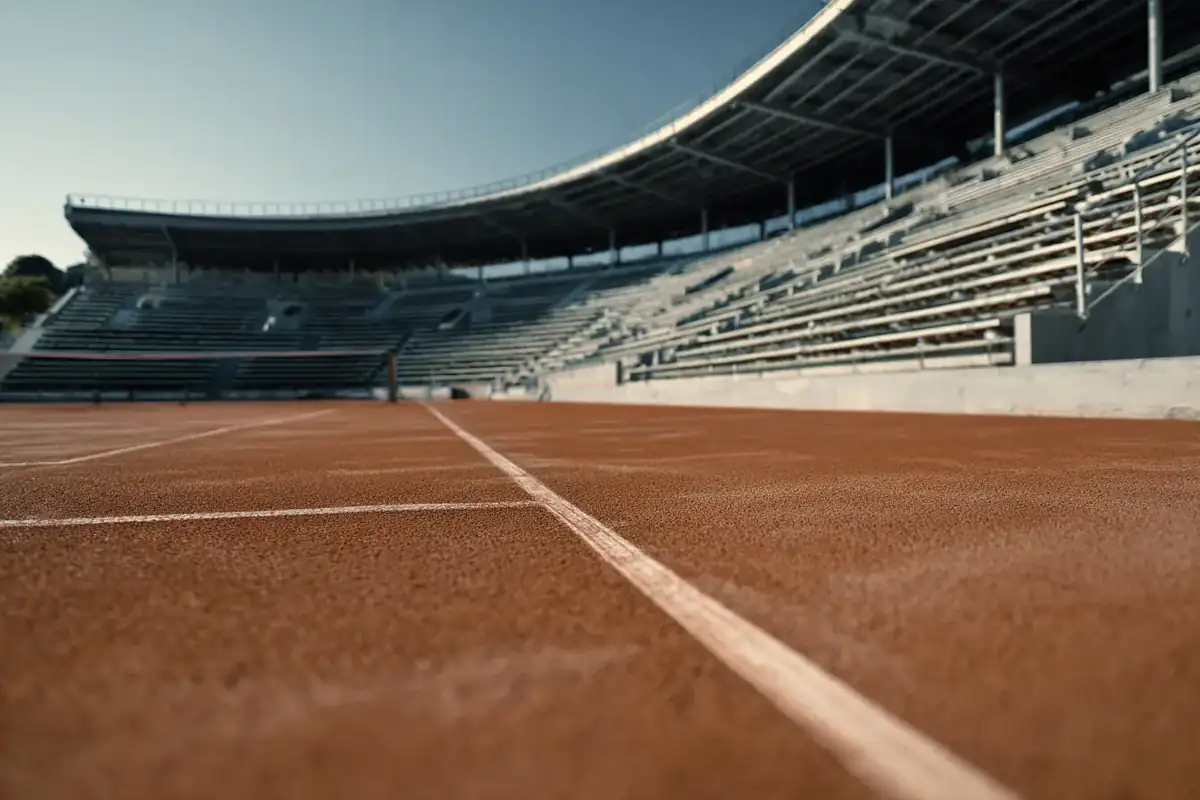
According to the City of Paris, the stadium was built in 1928 to host the Davis Cup after the success of French tennis. It is named after Roland Garros, an aviator born in 1888 who died in 1918. The French Championships already existed, but they did not have a single home.
That origin explains a trait of the place: a modest site by the standards of the major tournaments, enlarged step by step and wedged into a residential district. Successive extensions brought the facilities closer to the city rather than away from it, which you still feel in the way people move around.

Philippe-Chatrier, the main court
Court Philippe-Chatrier is the main court. It was renamed in 2001 in tribute to a former leader of the French Tennis Federation, and now has a retractable roof. The cover lets matches continue despite rain, and night sessions have been staged there since 2021.
For a guest, this court is often the landmark of the day, and large flows gather around it. Keep that in mind when you fix a return meeting point with your chauffeur, because the end of a session can bring a great many people out at the same moment. A chauffeur who knows this rhythm will suggest a slightly earlier or later pick-up rather than the obvious one.
Simonne-Mathieu and the Auteuil greenhouse garden
Court Simonne-Mathieu, built during the stadium’s modernisation programme, is set inside the Jardin des Serres d’Auteuil. Its mix of glass and greenery gives the site a character quite different from the more traditional stands.
The plan to extend into this garden caused controversy in the early 2010s before going ahead. For the visitor the interest is practical: a court nestled in greenery is crossed on foot, and the circulation feels different from the walkways beside the large courts. Walking time inside the grounds can therefore be longer than the map suggests, which is worth allowing for.
Suzanne-Lenglen and how the site keeps changing
Court Suzanne-Lenglen is the stadium’s second major court. The City of Paris reports that an architect-designed roof was planned to protect it, as part of the works linked to the 2024 Olympic Games, when the stadium hosted tennis and boxing, followed by Paralympic events.
These changes are a reminder that the site evolves from one edition to the next. Orientation maps, routes and some access points may differ between tournaments: relying on last year’s memory invites surprises, which is why it helps to read the organiser’s information before you set out.

The Auteuil district: what to know about getting around
The stadium is at Porte d’Auteuil in the 16th arrondissement, on Avenue Gordon Bennett. Metro lines 9 and 10 and several bus routes serve it. The area is residential, much used by locals, and traffic can swing sharply during the tournament.
What a chauffeur mostly brings is anticipation: choosing the right side of approach, allowing for one-way streets, setting a return meeting point away from the immediate jam. For route details, see our guide to getting to Roland-Garros by chauffeur; the service itself is described on the Roland-Garros chauffeur page. It is also wise to keep a printed or saved copy of the ticket details, in case a phone runs out of battery.

For those organising: preparing a guest’s day
An assistant or concierge can give the guest the court name, session time and checkpoint shown on the ticket. Those three details are enough for the chauffeur to set a departure time from the hotel, the drop-off and the return pick-up. See also our approach for executive assistants.
For a group, it is wise to expect staggered arrivals and to plan several vehicles. Access and perimeters are communicated by the organiser; we build them into your transport plan. More guides sit in the Roland-Garros section, including the article on organising a week at the tournament. Departure points from the hotel can then be set for each person without confusion.

Book a chauffeur for Roland-Garros
To move around the stadium, it is best to book the chauffeur with the day’s programme in hand: the court, the start time and the drop-off point indicated by the organisers. IKIGAI Limousine issues a firm quote before confirmation.
A chauffeur at disposal for the day handles the journeys around the match or hospitality schedule, and stays reachable between sessions. See our Roland-Garros chauffeur page and request a firm quote.

Sources consulted
- City of Paris: Roland-Garros stadium
- Sortiraparis: the stadium, temple of clay
- RATP: getting to Roland-Garros
- Roland-Garros: accessibility
IKIGAI Limousine is independent and is not affiliated with any venue, brand or organisation mentioned. Names are cited for information only.